
Minestrone and ribollita- two beloved, hearty and delicious Italian soups. I am sure you have heard of minestrone? But ribollita – you might not know that soup- or if you have, you probably have only seen that in Tuscany! Both soups are not to be missed, they are so similar but they have a few key differences. Therefore, let’s dig in today to break down their unique ingredients, preparation methods, and rich histories.
As the weather changes here, I have been thinking about my many winter days when a bowl of ribollita was just what I needed to warm up and get nourished. But I also married a Roman who loves to make minestrone.
Minestrone
Let’s dig in – We all know and love Minestrone, a staple of Italian cuisine that has roots dating back to ancient Roman times. It’s a versatile vegetable soup that varies by region and season. The word “minestrone” derives from the Latin “ministrare,” meaning “to administer,” and indeed, this soup has long been administered as a nutritious, filling meal for a long long time.
What’s In it: 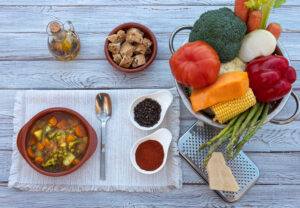
– A variety of seasonal vegetables
– Beans or legumes
– Often, small pasta or rice
– A flavorful broth base
The beauty of minestrone lies in its adaptability. In my travels through Italy, I’ve encountered countless variations, each reflecting local produce and traditions. In Liguria, you might find minestrone with pesto, while in Milan, it often includes rice instead of pasta.
Ribollita
Then what is ribollita you might ask?
Ribollita is a Tuscan specialty with a more specific preparation method. The name “ribollita” means “reboiled,” which speaks to its origins as a peasant dish made by reheating leftover minestrone with the addition of stale bread.
Essential ingredients for ribollita include: 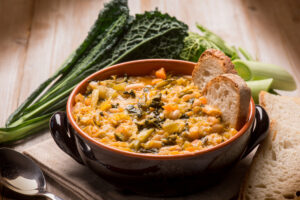
– Cannellini beans
– Cavolo nero (Tuscan kale) or other leafy greens
– Stale Tuscan bread
– A soffritto base of onions, carrots, and celery
– Tomatoes
Unlike minestrone, the preparation of ribollita is often a two-day process. On the first day, you prepare a vegetable soup very similar to minestrone. The next day, you layer this soup with slices of stale bread and reheat it, allowing the bread to break down and make the soup super thick. So the bread is the big difference here. Interestingly, Tuscan bread is unsalted so that’s important to keep in mind.
So let’s do a Comparative Analysis: Minestrone vs. Ribollita
– Minestrone: Broth-based, lighter soup; no bread used; Widespread across Italy; varies by region. Single-day preparation. Lighter, more vegetable-forward.
– Ribollita: Thick, stew-like texture; Stale bread is a critical ingredient, absorbing liquid and thickening the soup; Specifically Tuscan; deeply rooted in local culinary tradition. Two-day process involving reheating and bread integration. More calorie-dense due to bread; more filling.
Cucina Povera
 But both soups represent “cucina povera” (peasant cooking). What is cucina povera? It literally means “kitchen of the poor,” and refers to a traditional Italian cooking style that emphasizes simplicity and resourcefulness. The entire focus on minimizing waste and making the most out of what is available, often incorporating every part of an ingredient.
– Seasonal vegetable base.
– Nutritious, economical meals.
– Use of similar base vegetables (onions, carrots, celery).
As always, quality of ingredients significantly impacts the final dish. If you are going to give either of these soups a try, make sure to use the freshest seasonal vegetables and high-quality olive oil. When we go to Italy as a family, half of our luggage is full of gifts on the way over. And that same space in our luggage is reserved for olive oil made on our family’s land for the way back. We literally call luggage the olive oil bags. But frankly, you can find great EVOO anywhere in the US.
These soups are more than just meals; they’re a reflection of Italian culture and history. Minestrone showcases the diversity of Italian regional cuisines, while ribollita embodies the Tuscan principles of simplicity and resourcefulness.
Whether you’re enjoying a light minestrone in summer or a hearty ribollita like I am about to make in winter, you, my friend, are partaking in centuries of Italian culinary tradition. (And if you are wondering what is the best season to travel to Italy, check out our video about that here.)
These soups, with their humble ingredients transformed into nourishing meals, are the heart of Italian cooking—simplicity, flavor, and the judicious use of local seasonal ingredients.